
Are IPS or TFT displays better?
Which is better, IPS or TFT ?
Many wonder about the difference between a TFT and an IPS display. Which of the two is better? IPS or TFT? Where exactly are the differences? And what does it have to do with an LCD?
Basically, both are LC displays; you don't actually say "LCD display", that's "doubled" since the word LCD already contains the "liquid crystal display". Liquid crystal displays (LCD) are available in one color (monochrome) or in full color. The full-color displays are then called TFT displays. TFT = "Thin-Film-Technology". This refers to the driver electronics and not the display technology.
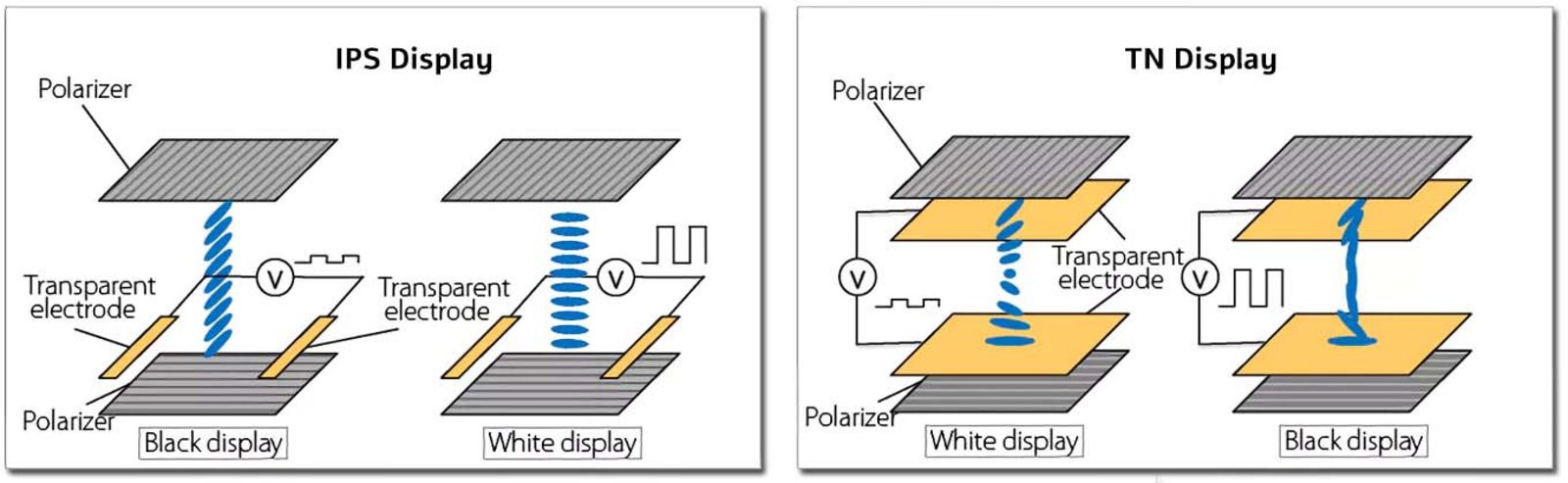
An IPS display describes a special display technology, even if it is a color TFT display.
TFT = color LCD with driver for every single pixel directly on the glass, usually in TN-technology
IPS = TFT with wide viewing angle
The IPS technology is a so-called "in-plane switching" technology. It creates a contrast that is almost independent of the viewing angle. So, no matter if you look at the display directly from the front or rather from the left or top, the contrast remains constant. This means that IPS displays can be read well from all sides. IPS displays achieve a viewing angle of up to 85° in all four directions compared to 45° to 55° for classic TN displays (TFT displays).

TFT = 45-55° viewing angle
IPS = 85° viewing angle
Furthermore, the color stability is much higher with IPS displays. If you look at a normal TFT display in TN technology from above or below, you will observe the typical gray inversion effect. This refers to a sudden tilt of the colors into a negative display. The colors are lost and the display content turns gray to brown. The content remains somewhat recognizable, but appears in completely wrong colors. IPS technology doesn't know this effect, the colors remain intact.
Together with a good backlight, as used in all DISPLAY VISIONS displays, you can still achieve high brightness even when looking at the display from an angle.
TFT = Gray Inversion Effect
IPS = colors remain stable even when viewing angle changes
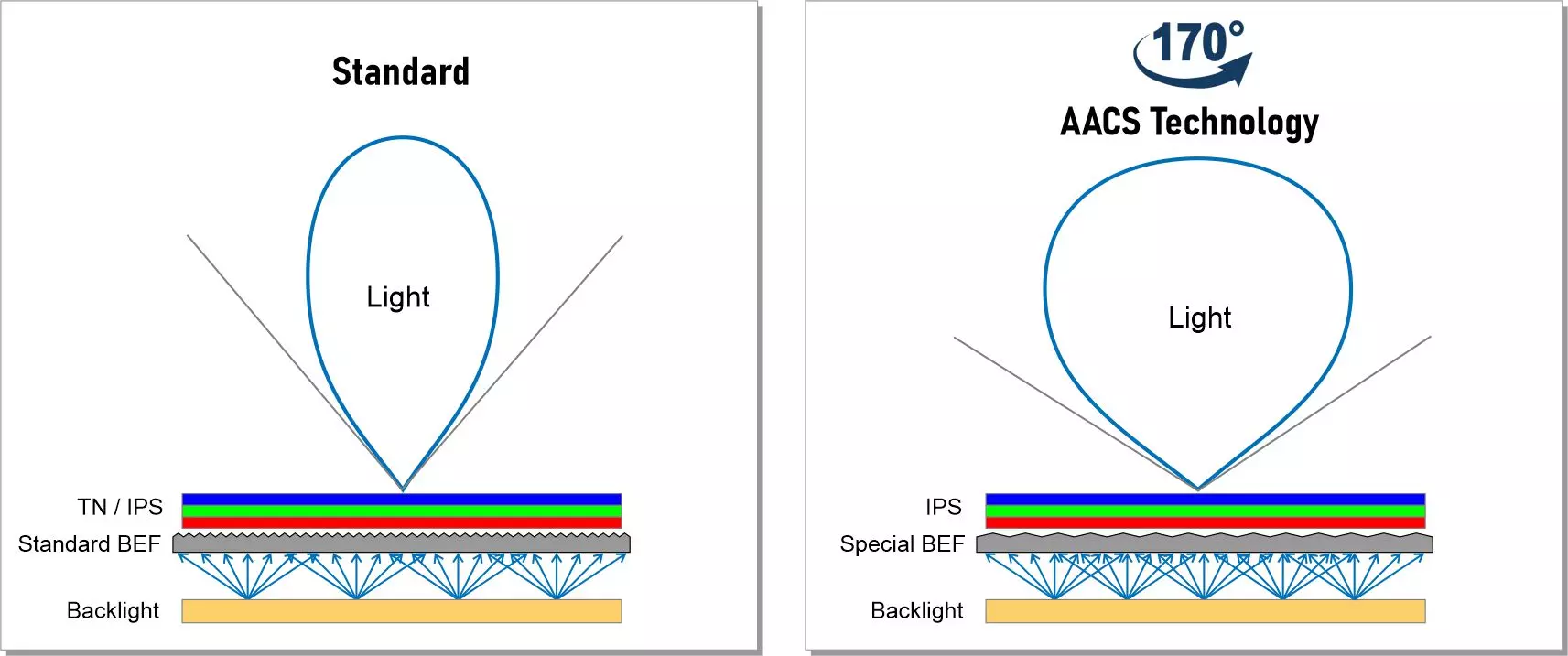
The AACS technology (All-Angle-Color-Stability) brings another technology advantage.
Due to their low transmission rates, TFT displays require very bright backlighting. This is achieved using so-called BEF films (Brightness Enhancer Film). They focus the light of the backlight to a small angle. In this way, a bright display can be created with a few LEDs (inexpensively). However, if you move your head outside the normal, the display quickly becomes much darker.
Not so with the AACS technology, because here the wide viewing angle of the IPS display is supported by a illuminationwith wide angle: thus we achieve a brilliant and bright display even at extreme viewing angles. With a much wider viewing angle than normal TFT displays, color stable and also incomparably brighter from the side.
Here you find some AACS, TFT and IPS Displays.
© Dipl. Ing. Ralph Tischer - 02.2024
TFT and IPS Displays from 1" to 10"
You will find a large selection of professional displays for industry and medical technology here. Inexpensive and high quality. Plus support, tools, initialization examples etc. if required. Also with touch panel (PCAP, resistive) or as a complete HMI with interface and housing.
more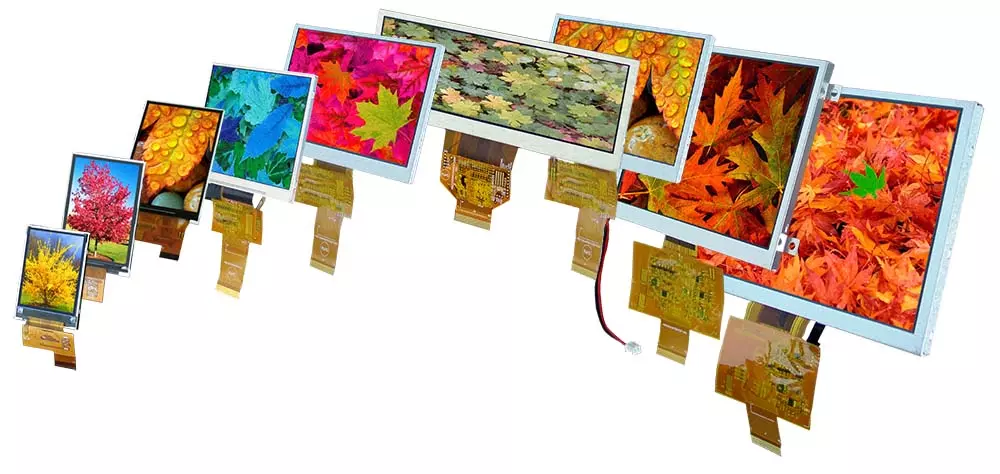
AACS = wide viewing angle, colors remain stable, very bright display, even at an oblique viewing angle
FAQ - Questions and Answers About IPS vs. TFT Displays
Questions and brief, easy-to-understand answers about IPS vs. TFT displays
What are the main differences between IPS and TFT displays?
The main difference between IPS and TFT displays lies in their viewing angles and color stability. IPS displays offer a wide viewing angle of up to 85° in all directions, while TFT displays using TN technology have a viewing angle of only 45° to 55°. Additionally, IPS displays maintain color stability even when viewed from the side, whereas TFT displays exhibit the gray inversion effect, in which colors shift. IPS technology ensures that colors remain stable even at oblique viewing angles. TFT displays require very bright backlighting, which is supported in IPS displays by AACS technology.
Why are IPS displays better suited for viewing from the side?
IPS displays are better suited for viewing from the side because they use in-plane switching technology, which produces contrast that is virtually independent of viewing angle. As a result, the contrast remains constant no matter what angle you view the display from. In contrast, TFT displays using TN technology exhibit the gray inversion effect when viewed from the side, causing colors to shift and the content to appear in incorrect colors. AACS technology also enhances brightness at extreme viewing angles. This makes IPS displays ideal for applications where the viewing angle varies.
What are the advantages of AACS technology in IPS displays?
AACS technology in IPS displays offers the advantage of a wide viewing angle with consistent colors and high brightness, even when viewed from an angle. This technology enhances IPS displays by optimizing the backlighting to ensure a brilliant and bright image even at extreme viewing angles. Unlike standard TFT displays, which quickly become darker when viewed from the side, the brightness remains constant on AACS-supported IPS displays. This is particularly important for applications where the viewing angle changes frequently. AACS technology ensures that the displays appear significantly brighter even when viewed from the side.
How does backlighting affect the performance of TFT displays?
The backlighting significantly affects the performance of TFT displays, as these displays require very bright illumination due to their low transmittance. This is often achieved using BEF films, which focus the light into a narrow angle to produce a bright display using only a few LEDs. However, this causes the display to quickly become darker when viewed from outside the optimal viewing angle. In contrast, IPS displays with AACS technology benefit from more uniform illumination, ensuring high brightness even at extreme viewing angles. This makes them more versatile.
What are the disadvantages of TFT displays compared to IPS displays?
Compared to IPS displays, TFT displays have the disadvantage of a limited viewing angle of 45° to 55°, which causes color shifts when viewed from the side. Another disadvantage is the gray inversion effect, in which colors shift and the content appears in incorrect colors. Additionally, TFT displays require very bright backlighting, which is focused by BEF films, leading to a loss of brightness when viewed at an angle. In contrast, IPS displays offer uniform brightness and stable colors from all viewing angles thanks to AACS technology. These features often make IPS displays the better choice.
Why is DISPLAY VISIONS the best choice for IPS and TFT displays?
DISPLAY VISIONS is the best choice for IPS and TFT displays, as it offers a wide selection of professional displays for industrial and medical applications. The displays are affordable and high-quality, and come with support, tools, and initialization examples. They also utilize advanced technologies such as AACS, which ensure excellent color stability and brightness even at extreme viewing angles. With options for touch panels and complete HMI solutions, DISPLAY VISIONS offers customized solutions for a variety of applications. Their expertise and personalized service make them a reliable partner.

